
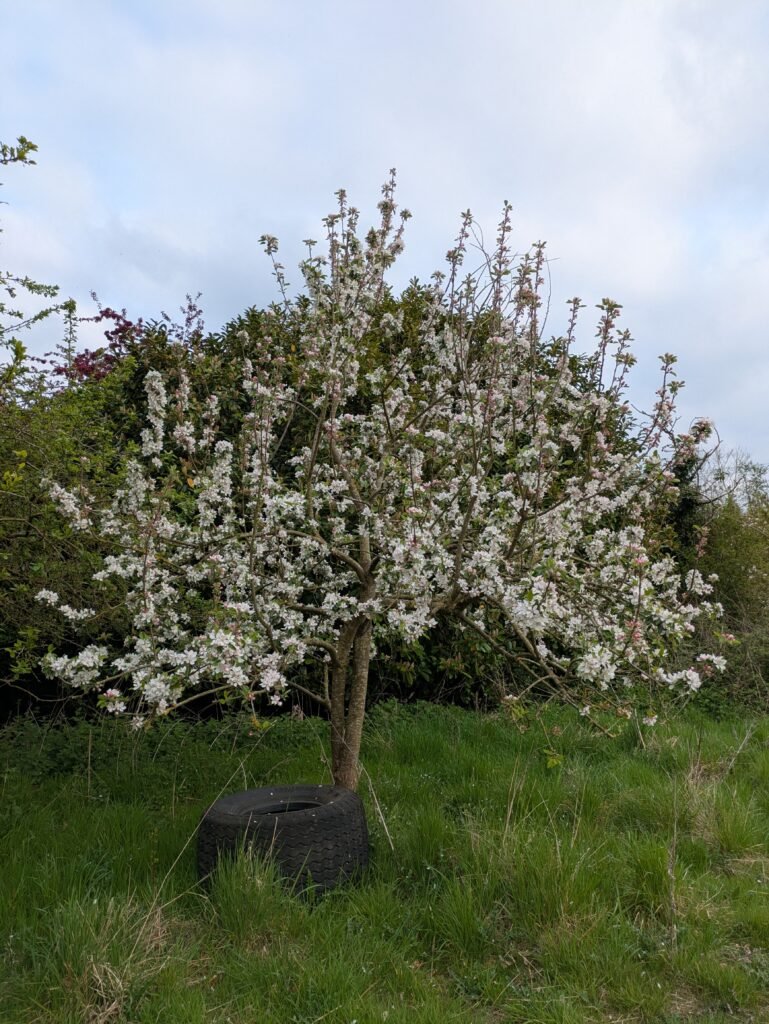
When to Prune Apple Trees
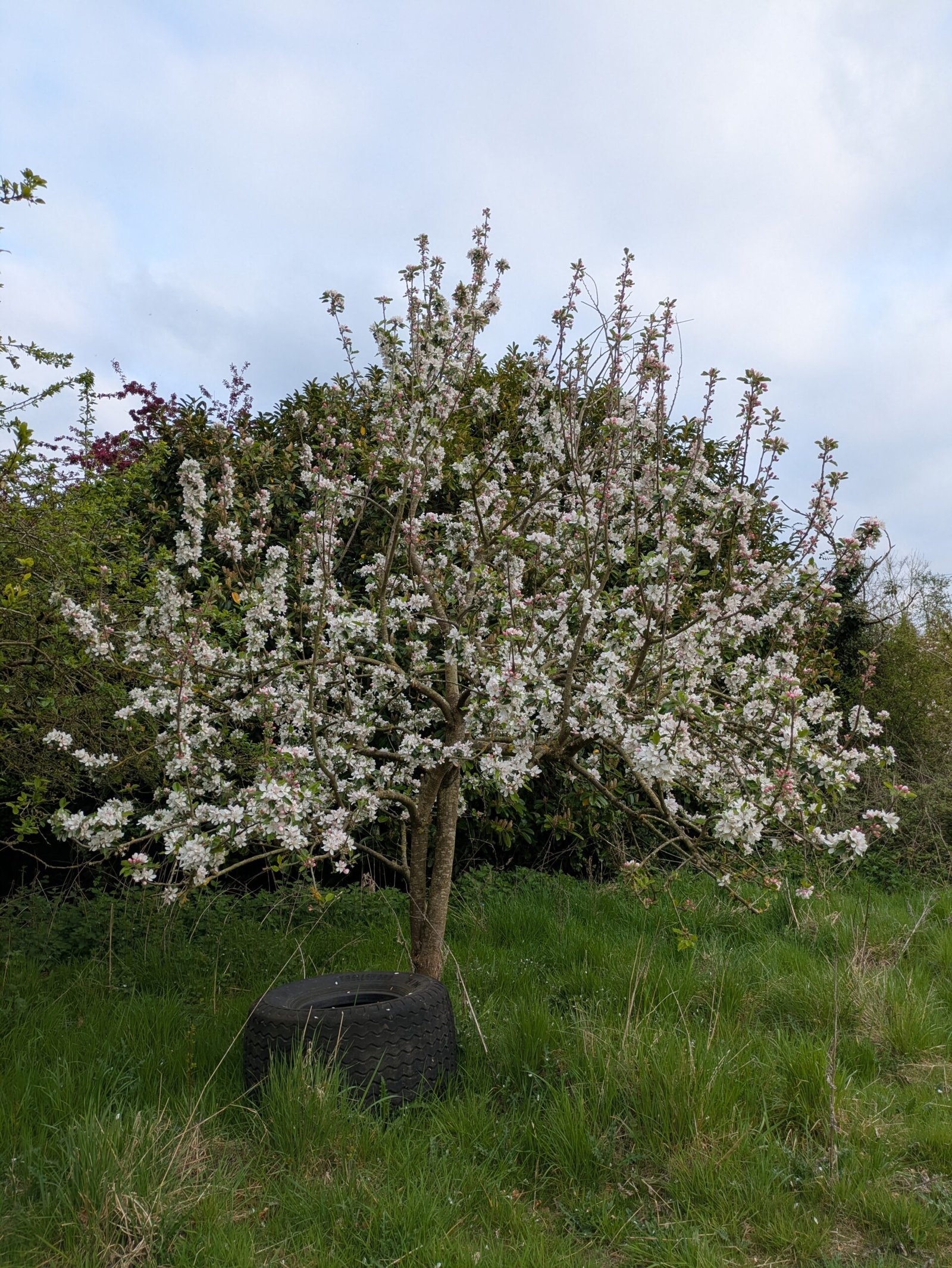
Prune your apple trees during their dormant season. In the UK this will be between November and early March.
You can tell if your tree is dormant because it won’t have any leaves on it. It can have buds during dormancy, but once these start to swell and become more visible, it has come out of dormancy.
How to Prune Apple Trees
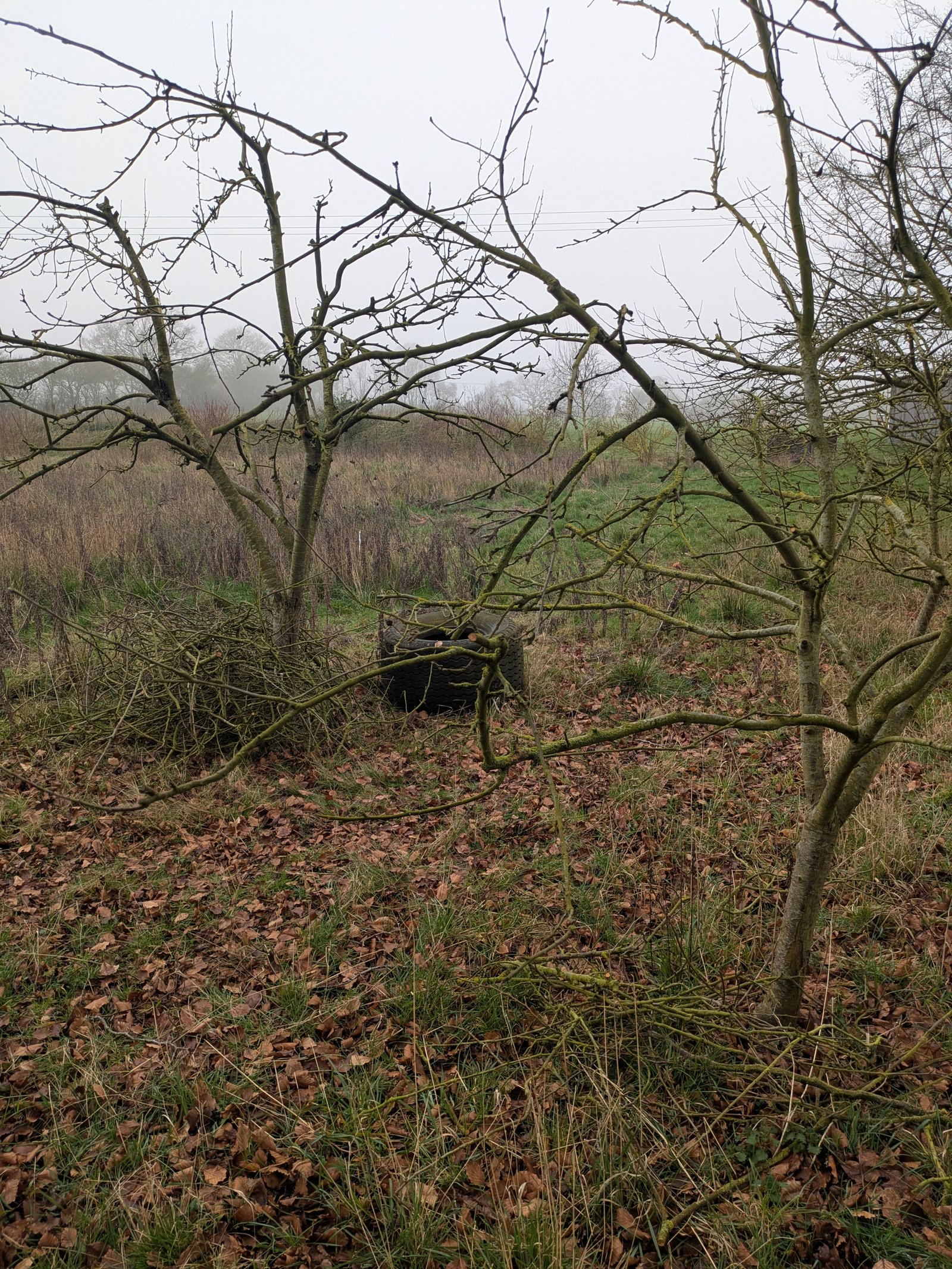
The three main things that you want to focus on when pruning apple trees are:
- Removing dead branches.
- Removing diseased branches.
- Removing branches that cross over other branches.
You should aim to prune no more than 1/4 of the overall canopy of the tree. If you have already pruned this much or more, then you might want to stop there, or prune only a few of the branches mentioned below.
If you haven’t pruned that much, you can start pruning the more obvious branches that fit any of the below criteria.
You can also prune:
- Branches that go inwards, towards the middle of the tree.
- Branches that are too spindly.
- Branches that are too low to the ground, where the weight of fruit might drag it to the ground, or it is too low to walk past, mow under, or whatever other access you might need.
- Branches that are too high. If you want or need to keep the tree compact, remove branches that go straight up. This can also be useful if you’d rather have access to pick the apples off of the tree. I personally prefer to pick the fallen apples.
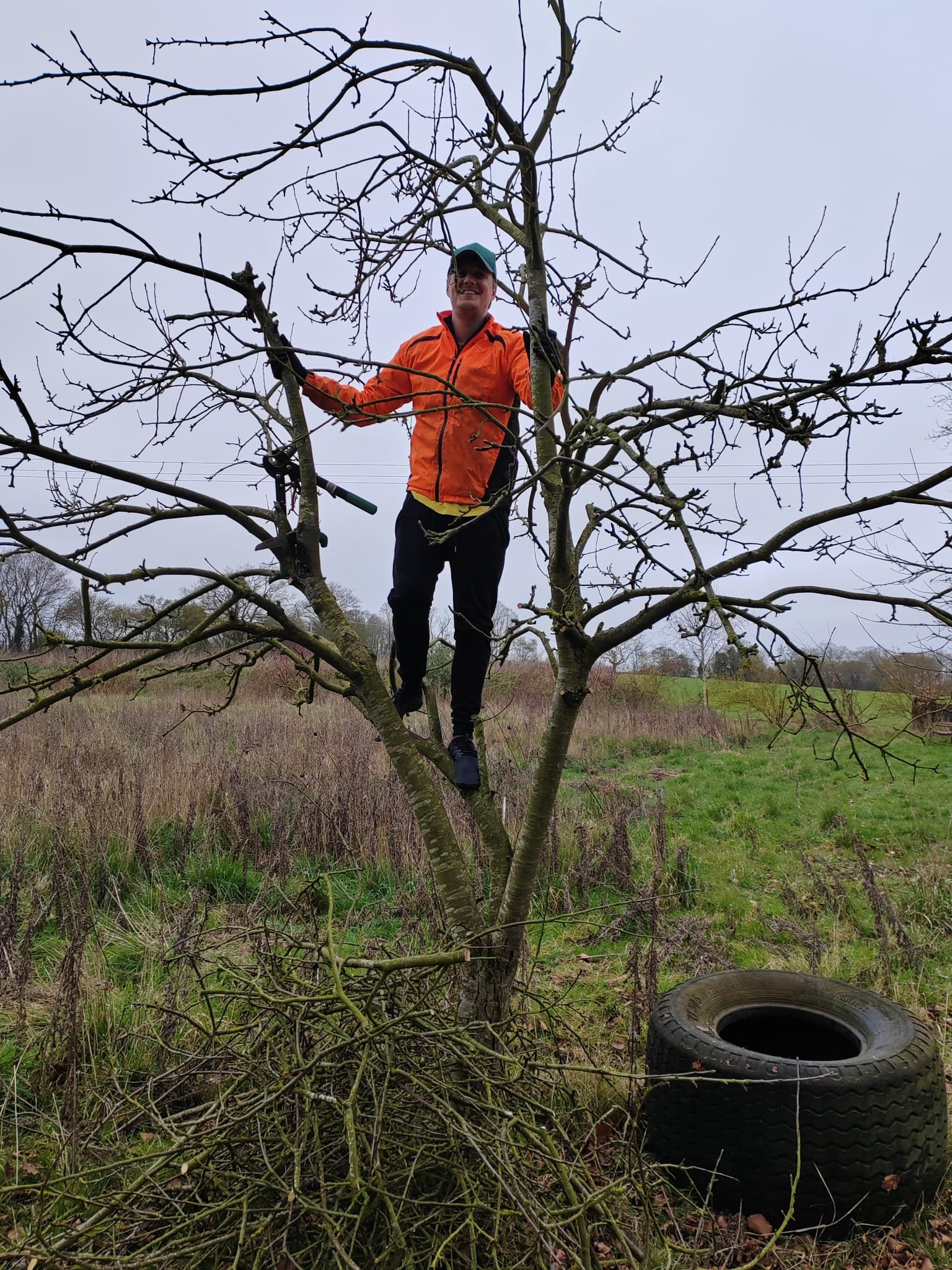
You might need to climb up the tree, or use a ladder, step ladder, tyre, etc. to reach some of the higher branches.
What tools do you need?
Secateurs – these are for the smaller branches.
Loppers – these may be needed for the thicker branches that you can’t get through (or easily get through) with your secateurs.
Saw – these may be needed for even thicker branches that the loppers can’t manage. Or you may prefer to use this over loppers.
Gloves – gardening gloves to protect your hands are recommended, and as it will be winter, the weather is likely to be cold as well.
Sunglasses/cap/glasses – as you are pruning the tree, small branches and other little bits may fall down, and if you’re looking up they can get in your eyes. I wear a cap on cloudy or wet days (when it is too dark for sunglasses), which does a good job.
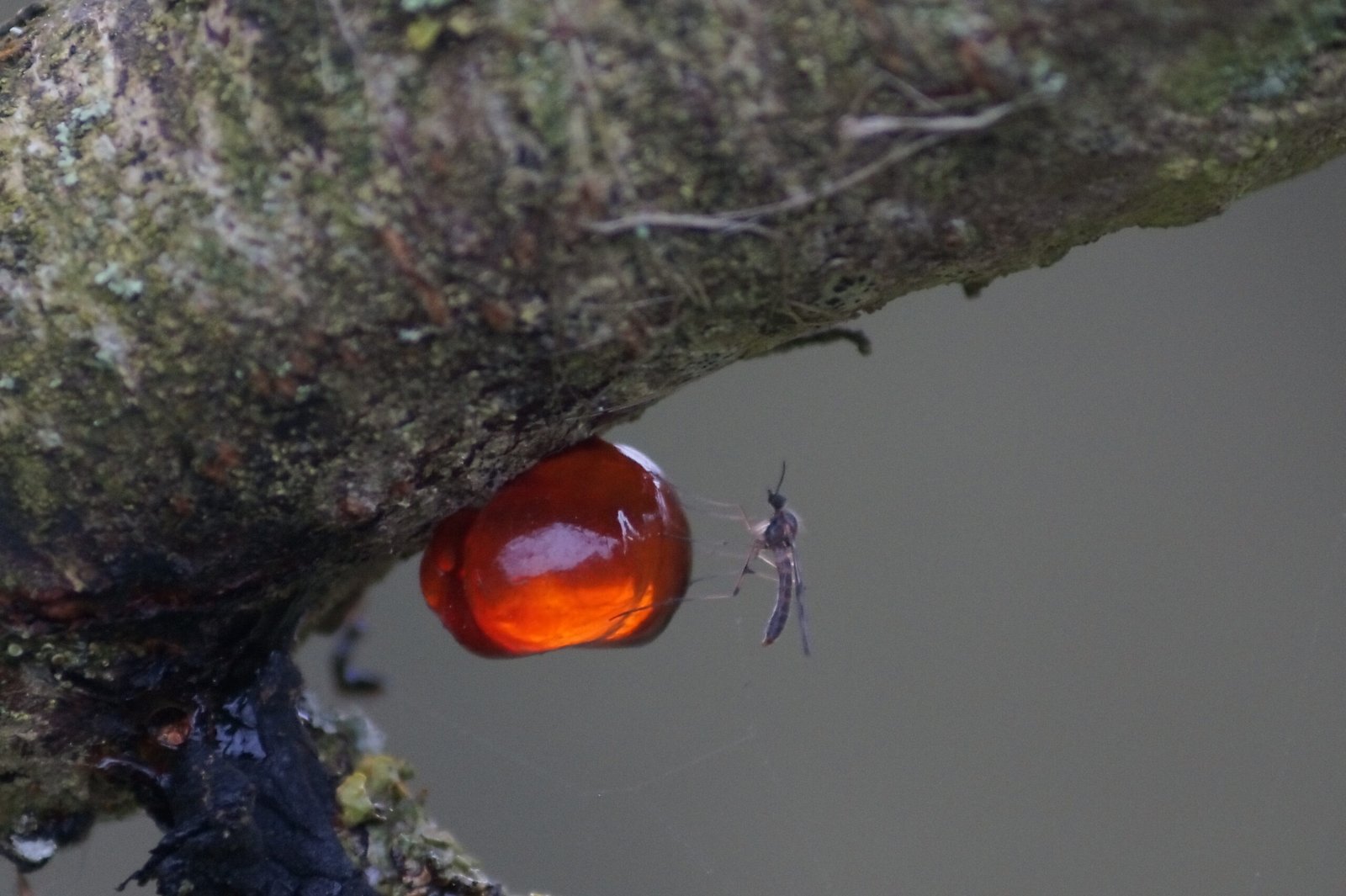
And you never know what you might see while you are out there pruning. This was something that I noticed on one of the fruit trees.

Leave a Reply